
Look, if your car dies, runs out of gas, or you have to ditch it during a bug-out, those fancy sneakers or work shoes you’re wearing right now are going to turn into foot-shaped torture devices after the first couple of miles.
When the grid is down, roads are flooded, or you’re forced to walk out of a bad situation, your feet become your most important transportation system. Blisters, wet socks, twisted ankles, or a tick buried in your skin can turn a manageable hike into a real problem fast. That’s why a dedicated pair of quality hiking boots lives in my trunk 365 days a year — no exceptions.
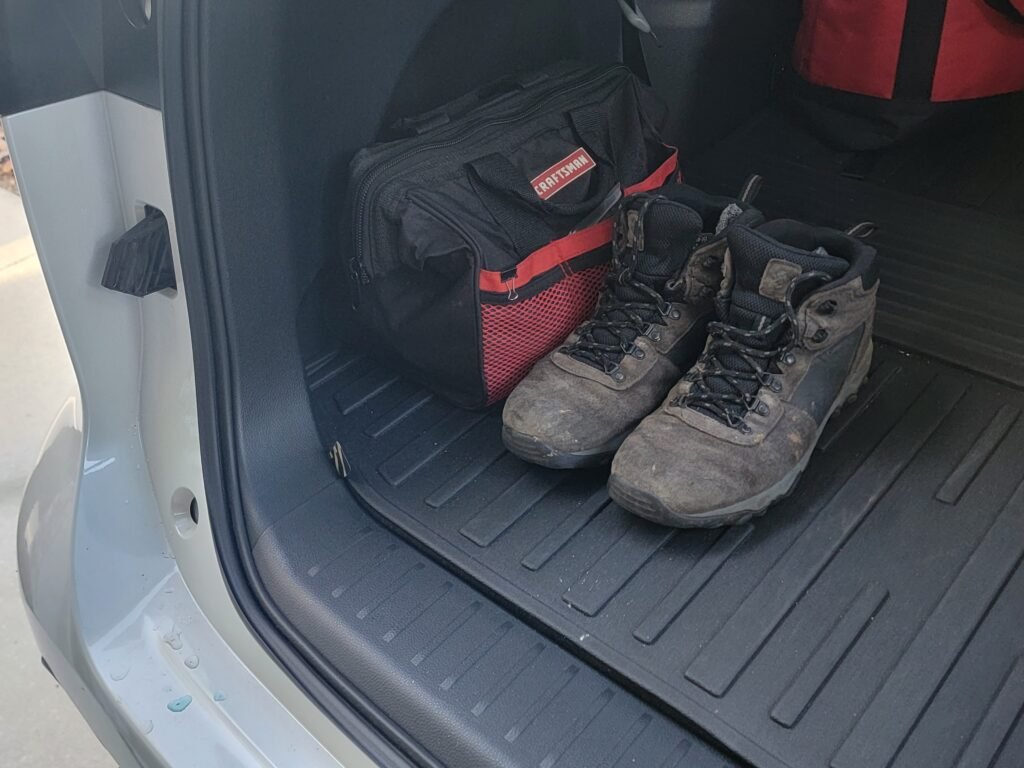
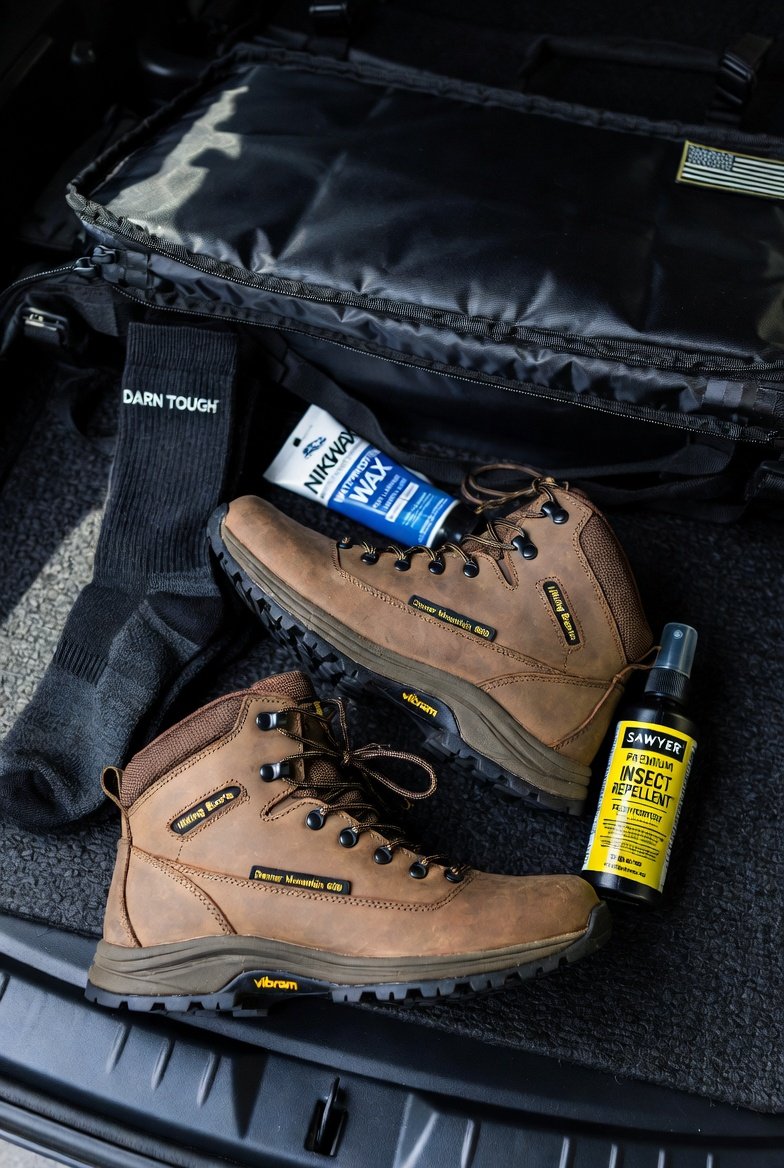
I keep a pair of Danner Mountain 600 (or similar full-grain leather hikers) stashed back there with a fresh pair of Darn Tough tactical/merino wool socks. These two together are non-negotiable. The boots give you ankle support, aggressive tread for mud or debris, and durability that cheap boots simply don’t have. The socks wick moisture, resist blisters, and keep your feet in much better shape even after hours on the move.
To make them even more capable:
- Hit the boots with a good coat of Nikwax Waterproofing Wax before you store them. It keeps water out, adds flexibility, and makes the leather more comfortable over time. Reapply every few months or after heavy use.
- Dust the inside with foot powder ahead of time so your feet stay dry and friction-free from the first step.
- Spray the exterior and laces with a solid insect repellent (permethrin-treated is ideal). This creates a serious barrier against ticks, chiggers, and mosquitoes — especially important if you’re cutting through brush or walking along roadsides during an evacuation.
These small upgrades make a massive difference when you’re covering miles on foot with a pack on your back. Dry, warm, blister-free feet keep your head clear and your pace steady. Wet, chewed-up feet will slow you down, make you miserable, and increase the chance you make bad decisions under stress.
Pro tip: Don’t just throw brand-new boots in the trunk and forget about them. Wear them on a few hikes or range days first so they’re properly broken in. Nothing worse than having to “break in” boots while you’re already bugging out.
Keep the boots, socks, wax, powder, and repellent together in a heavy-duty tote or dry bag so you can grab the whole system in seconds. This is your primary “oh shit, the car stopped” insurance policy.
When everything electronic fails and you’re left with your own two feet, good boots and smart sock choices are the difference between walking out like a prepared man and limping out like a casualty.
Gear Links (affiliate):
- Hiking Boots: https://amzn.to/4v2iGSl
- Darn Tough Socks: https://amzn.to/4bXdS82
- Nikwax Waterproofing Wax: https://amzn.to/4dmbM47
- Foot Powder: https://amzn.to/4chaWVf
- Insect Repellent: https://amzn.to/4sFYX9x
What’s in your trunk right now for when the wheels stop turning? Drop it in the comments — let’s compare setups.